E-book format of webpage
1. Welcome

What is a "Living Lab"?
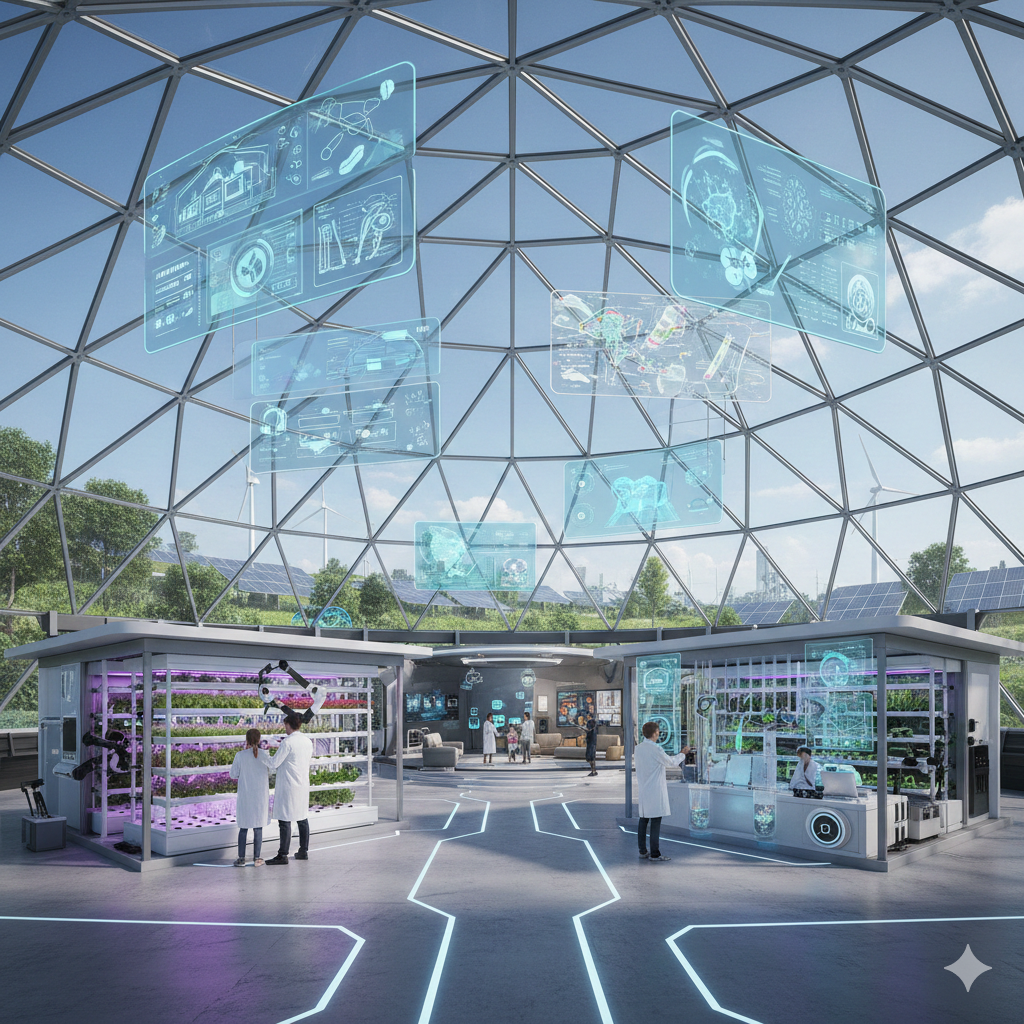
A Living Lab is a research and innovation concept that moves experimentation out of the traditional, closed laboratory and into real-world environments.
Instead of scientists testing a product in a vacuum, a Living Lab tests ideas in actual neighborhoods, homes, or workplaces with the people who will actually use them.
The 5 Core Characteristics
According to the European Network of Living Labs (ENoLL), a project must generally meet these five criteria to be considered a true Living Lab:
-
Real-Life Setting: Testing takes place in "wild" environments (like a city street or a education campus) rather than a controlled lab.
-
Co-Creation: Users aren't just "test subjects"; they are active partners who help design and suggest improvements to the solution.
-
Multi-Stakeholder: It involves the "Quadruple Helix"—government, industry, academia, and citizens—all working together.
-
Active User Involvement: Users provide continuous feedback throughout the entire development process, not just at the end.
-
Multi-Method Approach: Researchers use a variety of tools (interviews, data sensors, ethnography, and prototyping) to gather a complete picture of how the innovation works.
Why use them?
Living Labs are specifically designed to tackle "wicked problems"—complex issues like climate change, urban congestion, or healthcare for aging populations—where there is no single right answer and human behavior is a huge factor.
Common Examples
-
Urban Living Labs: A city might block off a street to cars and install smart sensors to see how residents change their walking habits or how local air quality improves.
-
Campus Living Labs: Universities often use their own buildings to test green energy technologies or waste-reduction programs, using students and staff as the primary "users."
-
Health Living Labs: Testing new "smart home" technologies in the actual apartments of elderly citizens to see if the tech actually helps them live more independently without being intrusive.
In short, a Living Lab is a way of saying: "Let's build this with the people it's for, in the place where they'll use it."